|
Home
|
Classes
|
UMAS
|
Water/Sewer
|
Performance Management
|
Regionalization/
Consolidation
|
School
Management
|
OPEB
|
Speeches
|
Blogs What's New
|
Welcome to The Abrahams Group Web Site
Mark D. Abrahams, President
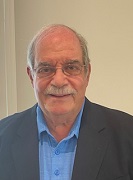 Mark D. Abrahams, CPA is an independent consultant who
teaches, writes, and consults on governmental financial, operational and performance
management. Mark started The Abrahams Group in Framingham, MA in 1994 with the mission
to make governments better, thus Bettergov@aol.com. He previously served as the Financial Management Coordinator
for the City of Worcester, MA, Assistant to the Massachusetts State Comptroller,
Chief of the Compliance Bureau for the Massachusetts Department of Revenue, and
Partner-in-Charge of KPMG Peat Marwick’s Boston Office Government Consultant Group.
Mark D. Abrahams, CPA is an independent consultant who
teaches, writes, and consults on governmental financial, operational and performance
management. Mark started The Abrahams Group in Framingham, MA in 1994 with the mission
to make governments better, thus Bettergov@aol.com. He previously served as the Financial Management Coordinator
for the City of Worcester, MA, Assistant to the Massachusetts State Comptroller,
Chief of the Compliance Bureau for the Massachusetts Department of Revenue, and
Partner-in-Charge of KPMG Peat Marwick’s Boston Office Government Consultant Group.
Mark has taught government accounting for the past thirty
years. He is a member of various organizations. He serves as
a member of several GASB committees, co-chair of the Financial Management Committee
of the New England Water Works Association, a member of the Dean’s Advisory Board
of the Sawyer Business School of Suffolk University, a member of the Massachusetts
Society of Certified Public Accountants Government Accounting and Auditing Committee,
and is Vice-Chair of the Narragansett RI Finance Committee.
He served as an advisor to the Budget and Fiscal Policy
Standing Committee of the Government Finance Officers Association. He holds a bachelor’s
degree in Political Science from Lake Forest College, a master’s of arts degree
from the Urban Studies Institute of the University of Toledo, and an MBA from Suffolk
University. He is a certified public accountant.
He is also president of AFS Associates, a company that
provides an on-line solution for small OPEB plans to calculate their GASB 75 obligations
under the alternative measurement method.
If you are interested in improving the efficiency and effectiveness
of your government then the contents of this web site should be of interest to you.
Classes
Class Updates
All classes will be remote.
- Are you having difficulty preparing your EOYR? The Massachusetts Association of Regional Schools (MARS) and Mark Abrahams will be conducting the 2024 End of Year Report Training Workshop. A half-day remote session is scheduled for Thursday, June 6, 2024. A full-day remote session is scheduled for Thursday, September 12, 2024. This training will provide guidance on preparing your End of Year Report. You may have up to four people from your district or municipality attend. For further information, including registration, please click on http://www.theabrahamsgroup.com/Courses_EOYR.htm
- Having trouble preparing your balance sheet for Free Cash or E&D Certification? Then participate in the next remote How to Prepare Massachusetts' Balance Sheet class, co-sponsored with the Massachusetts Association of Regional Schools (MARS), on Monday, June 17, 2024. A full-day class will be held remotely on Thursday, September 19, 2024. This class will help you prepare your balance sheet through Excel combining worksheets. This is not an overview class; this is a how to do it class using Excel to prepare the balance sheet. This class will also cover all the portal and related forms (checklist, cash reconciliation, statement of indebtedness, and the like). You may have up to four people from your district or municipality attend. For more information, please visit http://www.theabrahamsgroup.com/Courses_Balance_Sheet.htm
- Do you need help with preparing Schedule A? Our half-day course to assist you in Preparing Schedule A will be held on Thursday, July 25, 2024, from 9:00 to noon. This class is a must for new municipal finance officials. This class will review the UMAS Chart of Accounts and will break down Schedule A into logical preparation steps. You may have up to four people from your district or municipality attend. For further information, visit http://www.theabrahamsgroup.com/Courses_ScheduleA.htm
- The 2024 Uniform Massachusetts Accounting System (UMAS) class will start remotely on Friday, September 20, 2024 (full day). UMAS is offered to municipal and school officials and private sector individuals and related staff, who desire a basic course in current Massachusetts' governmental accounting. The 11-session course will focus on the UMAS system as promulgated by the Bureau of Accounts in their updated UMAS Manual, including recent revisions to the manual. UMAS is the "preferred" accounting system for municipalities; regional school districts; water, sewer, fire and other districts; and municipal school departments. Learn about the UMAS Modified Accrual basis of accounting. The course integrates Department of Elementary and Secondary Education budgeting, accounting and reporting requirements, the Statement No. 34 reporting model and Statement No. 54 Fund Balance of the Governmental Accounting Standards Board and water, sewer, fire, regional school and other district requirements, including changes to the general, special revenue, capital projects, and enterprise fund chapters. The class will also meet on the mornings of September 26 and 27, October 17, 18, and 31, November 1, 21, and 22, and December 6, 2024. You may have up to four people from your district or municipality attend. For more information about this class, please click on http://www.theabrahamsgroup.com/Courses_UMAS.htm.
- Can you post your Tax Recap sheet? Can you pass this part of the Certification Exam? The Tax Recap Sheet half-day class will be held the morning of Friday, September 27, 2024, remotely. This class will break down the Massachusetts Recapitulation Sheet into postable general ledgers and then journalize how to post the budget using Budget Control and Memorandum accounts. This class will focus on the guidance provided in Chapter 8 of the revised UMAS manual. You may have up to four people from your district or municipality attend. For further information, visit http://www.theabrahamsgroup.com/Courses_Recap.htm
- Are your student activity accounts operating correctly? Are you in compliance with the DESE Student Activity Guidelines? The guidelines establish how student activity accounts should be administrated, including stewardship, operating procedures, receipts and deposits, purchasing and disbursements, and other guidelines. This document will be used by your auditors to audit your student activity accounts annually. Come learn about these guidelines at the remote Student Activity Accounting Workshop on Monday, October 21, 2024, from 9:00 am to noon. You may have up to four people attending from your district or municipality. Have your principals and designees attend. Over 300 school and municipal officials have previously attended this class. For more information, click on http://www.theabrahamsgroup.com/Courses_SAA.htm
- The half-day Capital Projects Fund Accounting class will be held remotely the morning of Thursday, November 21, 2024. This class will cover capital projects fund and debt accounting including premiums, accrued interest, debt issuance costs, long-term and short-term borrowings, BAN interest, and the long-term debt and general fixed assets account groups. This class will focus on the guidance provided in Chapters 11 and 15 of the revised UMAS manual. You may have up to four people from your district or municipality attend. For further information, visit http://www.theabrahamsgroup.com/Courses_CPF.htm
- Need help with your enterprise funds? The next Enterprise Fund Workshop will be held remotely on Friday, November 22, 2024, from 9:00 to noon and will cover the budgeting, accounting, financial reporting, and rate setting of Massachusetts Enterprise Funds. A must for town accountants, city auditors, finance directors, and utility district finance personnel. This class will cover enterprise fund acceptance, warrant article language, revenue and expenditure budgets, indirect costs, UMAS modified accrual accounting and accrual reporting adjustments, accounting for fixed assets and long-term debt, Schedule A-2 of the Recap, and computing certified retained earnings. You may have up to four people from your municipality attend, so bring your finance team and utility personnel. For further information, please visit http://www.theabrahamsgroup.com/Courses_Enterprise.htm.
- The next School Fund Accounting/Finance Law Course will be held remotely on the mornings of Monday, November 25 and December 2, 2024. This is one class over two mornings. These sessions will focus on fund accounting requirements based on the provisions in the Massachusetts General Laws pertaining to School Finance. The focus is on Chapter 71 of the MGL, school special revenue funds, including grants, revolving, gift and donation, Transportation and SPED stabilization funds, student activity accounts with emphasis on the DESE Student Activity Accounts Guidelines, regional excess and deficiency calculations and rules, and other funds including changes from the Municipal Modernization Bill. If you need a class to teach you the day-to-day basic school fund accounting/finance requirements, then this class is for you. This class will focus on the school finance laws and accounting requirements for municipal and regional school districts. You may have up to four people from your district or municipality attend. For more information, including registration, please visit http://www.theabrahamsgroup.com/Courses_School_Fund_Accounting_Workshop.htm
- Can you explain the GASB statements? The eight fund and two government wide statements? Come learn about these statements at the 2024 GASB Financial Statements Overview Workshop that will be held on the morning of Friday, December 6, 2024 from 9:00 – 12:30 remotely. If you want an overview of the GASB financial reporting model then this workshop is for you. You may have up to four people from your district or municipality attend. For more information, please click on http://www.theabrahamsgroup.com/Courses_GASB34.htm
- The 2024 ESE/DOR Roundtable will be held on Friday, December 6, 2024 from 1:30 to 3:30 PM remotely. This roundtable features Jay Sullivan or Rob O’Donnell from the Department of Elementary and Secondary Education and the Director Debbie Wagner or Tony Rassias from the Department of Revenue to discuss and answer your accounting and reporting questions. Find out when the new 2:00 bus leaves or if your mileage varies. Learn the latest about the DOR IGRs, OPEB Trust Funds, DESE Student Activity Guidelines, revisions to the EOYR Compliance Supplement, Circuit Breaker accounting regulations, E&D rules and regulations, and other accounting treatments. This roundtable is offered free of charge. For more information, visit http://www.theabrahamsgroup.com/Courses_DOE_DOR.htm
- The 2025 Boot Camp class will meet on Monday mornings, January 13 and 27, February 3 and 24, and March 3, 2025 plus Wednesday, January 22, 2025 remotely. This six half-day course is a detailed general ledger journal entry course designed to train accountants to learn the Uniform Massachusetts Accounting System (UMAS). This class is called Boot Camp because the journal entries are repeated over and over. This class helps prepare town accountants and city auditors for the UMAS certification exam. If you need a class to teach you the day-to-day UMAS journal entries or if you are having difficulty preparing for or passing the UMAS certification exam, then this class is for you. Topics covered include tax recap sheet, budget journal entries, reconciliation of treasurer's cash, accounts receivable reconciliation, capital project accounting, enterprise funds, tax title accounting, debt accounting, operating, adjusting and closing journal entries, and free cash calculation. Over 30 city and school officials have attended Boot Camp in each of the last 10 years. This is an extremely popular class and tends to fill up quickly. For more information including registration, visit http://www.theabrahamsgroup.com/Courses_BootCamp.htm
- The 2025 Municipal Law Workshop will meet on Monday mornings, February 10 and 17, 2025 remotely. This two half-day course focuses on Massachusetts General Laws pertaining to Municipal Finance. If you need a class to teach you the day-to-day basic legal requirements or if you are having difficulty preparing for or passing the Municipal Law portion of the UMAS certification exam, then this class is for you. Topics covered are Chapters 39, 40, 41, and 44 of the Massachusetts General Laws including recent changes from the Municipal Modernization Bill. Please join us for this informative class. Over 30 city and school officials have attended Municipal Law in each of the last 10 years. This is an extremely popular class and tends to fill up quickly. For more information, visit http://www.theabrahamsgroup.com/Courses_MunicipalLaw.htm
I hope to see you and or your staff at one or more of these classes.
Be safe.
Mark
Mark Abrahams, CPA
President, The Abrahams Group
19 Ridgewood Street
Ashland, MA 01721
617 803-8529 cell
Bettergov@aol.com
Mark.bettergov@gmail.com
www.theabrahamsgroup.com
Return to top
Water/Sewer Operational, Financial and Performance Management
The Abrahams Group has provided
financial management services to the water, stormwater and wastewater industry for thirty years
including financial planning, rate setting, accounting, budgeting, asset management,
best practices, and other services. He
is the co-author of the Environmental Protection Agency’s Wastewater Utility Management
Manual. This manual includes discussions on utility comprehensive diagnostic
reviews, energy management, financial management, contracting for professional services
and contract operations. He has also assisted the Massachusetts Department
of Revenue to develop enterprise fund accounting policies and procedures for Massachusetts
governments including revising the UMAS accounting manual. He has assisted the Massachusetts
Clean Water Trust to develop five best practices for water, stormwater and wastewater utilities. He has also authored several
articles on enterprise fund accounting and GASB standards. He is a frequent speaker and
trainer on utility finances. Mark Abrahams serves as the Co-Chair of the New England Water
Works Association’s Financial Management Committee. He teaches a class on Enterprise Fund
Accounting.
Related Rate and Financial Planning Projects
- Developing a cost/revenue model for the Cape Cod Commission, teaming with AECOM, to finance wastewater solutions for the 15 communities on Cape Cod.
- Developing a cost/revenue model for the Town of Orleans to measure the fiscal impact of alternative wastewater programs.
- Developing a financial reporting system for the Wareham Wastewater Fund on the Vadar system.
- Developing a financial reporting system for the Wayland Wastewater Commission on the MUNIS system.
- Developing a stormwater financing video for the Massachusetts Department of Environmental Protection.
- Developing financing plans for the towns of Charlton, Eastham, Provincetown, and Wellfleet’s water expansion projects.
- Developing financing plans for the towns of Concord, Millbury, Norton, Plymouth, Provincetown, Tiverton, Webster, and Whitman and the City of
Gloucester’s sewer expansion projects.
- Developing a water and sewer rate model for the Towns of Nantucket and Framingham.
- Developing a water betterment program for the Town of Charlton.
- Developing a sewer betterment program for the Towns of Concord, Hopkinton, Plymouth, Provincetown, and Tiverton, and the City of Gloucester.
- Conducting a true-up analysis of the Dudley — Webster Wastewater Treatment Plant.
- Conducting water and/or sewer rate studies for the Towns of Andover, Arlington, Ashburnham, Ashland, Braintree, Canton, Concord, Hopkinton, Franklin, Marblehead,
Medway, Millbury, Millis, Natick, Nantucket, Norwell, Norton, North Andover, Plymouth, Provincetown, Saugus, Southborough, Tyngsborough, Wayland, Webster, West Boylston,
West Groton, and Winchester, and the Cities of Chelsea, Everett, Lowell, Methuen, Quincy, and Somerville.
- Conducting audit reviews of water and sewer billing systems for the towns of Andover, Avon, Bellingham, Duxbury, Hopkinton, and Plymouth, and the cities of Brockton and Quincy.
- Conducting a look back review for the East Bridgewater Water and Sewer Funds.
- Developing three water cost of service and rate structure studies and a surcharge filing for
the Pawtucket Water Supply Board for submission to the Rhode Island Public Utilities Commission for interim and permanent rate revision requests and serving as an Expert
Witness.
- Conducting a water cost of service study for the Providence Water Supply Board for submission to the Rhode Island Public Utilities Commission for permanent rate revision requests
and serving as an Expert Witness.
- Analyzing the City/PWSB due to/due from account and preparing a surcharge filing for the Providence
Water Supply Board for submission to the Rhode Island Public Utilities Commission for permanent rate revision requests and serving as an Expert Witness.
- Conducting water and sewer rate studies for the Towns of Salem and Seabrook, New Hampshire.
- Conducting
a cost/benefit analysis for the Town of Marshfield to implement enterprise funds
for sewer, water and landfill operations.
- Managing two water cost of service and rate structure for the Newport Water Department for filing before the Rhode Island Public Utilities Commission. The projects
included performing revenue projections and sensitivity analysis on our microcomputer rate model and serving as an expert witness.
- Developing
revenue requirements for the Narragansett Bay Water Quality Management District
Commission as part of its initial start-up process. The projects involved
reviewing administration, interceptor sewer, treatment, pumping, debt service, insurance,
interest on working capital, equipment, and capital cost; participating in a public
review process; and filing a retail sewer user charge tariff before the Rhode Island
Public Utilities Commission and serving as an expert witness.
- Conducting a water cost of service study and prepared a rate filing to the Maine Public Utility Commission for the Kennebec Water District.
- Conducting a wholesale rate methodology and impact study project for the Massachusetts Water
Resources Authority. The project involved developing a water and sewer database for 51 rate-paying communities, developing wholesale rate methodology policies
for the MWRA and developing a detailed management plan for the MWRA to implement.
- Conducting a water rate study for the Dighton Water District.
- Developing indirect cost studies to recover central service costs for the town of Southbridge water, sewer and landfill enterprise funds,
and indirect cost plans for the towns of Ashland, Deerfield, Holbrook, Framingham, Marshfield, Milton, Provincetown, Saugus, Taunton, Wayland, Wellfleet, Winchester,
and Winthrop and the cities of Cambridge, Everett, Lowell, Portland and Somerville.
- Teaching Enterprise Fund Accounting to public works and municipal finance officials for the past ten years.
Return to top
Related Accounting and Management
Projects
- Developing water and sewer special revenue funds for the Cities of Newton and Lawrence and the Towns of Stoughton, Rockland, Bridgewater, Plymouth, Spencer, Milton, Winchester, and Brewster.
- Conducting a management audit of the City of Brockton’s water billing system.
- Conducting reviews of the City of Quincy, the Towns of Avon, Bellingham, Duxbury, and Plymouth’s billing system.
- Developing fixed assets accounting systems for the Cities of Gloucester, Holyoke, Quincy and Lowell, the Narragansett Bay Commission, Pawtucket Water Supply Board and the Towns of Ashland, Bellingham, Brewster, Canton, Duxbury, East Greenwich, Hopkinton, Lincoln, Littleton, Southbridge, Truro, West Boylston and Whitman.
- Conducting detailed management reviews of New England wastewater facilities for the New England Interstate Water Pollution Control Commission and Region I of the Environmental Protection Agency. The project involved reviewing nine facilities,
conducting workshops and writing the New England Wastewater Management Guide for use by facility and municipal officials. Major topics included cost
of service, cost recovery, budgeting, accounting, purchasing, personnel and information systems.
- Conducting training programs on enterprise fund accounting and rate making for the Government Finance Officers Association, Rhode Island and Massachusetts Society of Certified Public Accountants, Massachusetts Government Finance Officers Association, Massachusetts Municipal Auditors and Accountants Association, and Massachusetts Municipal Managers Management Association.
- Developing performance measurement, benchmarking, and activity based costing methodologies for water and wastewater operations for the cities of San Diego, Worcester, Indianapolis, Philadelphia, and Milwaukee and the Massachusetts Water Resources Authority.
- Providing financial accounting and advisory services to the Wayland Sudbury Septage Treatment Facility, the Wayland Wastewater Commission, the Tiverton Wastewater District, and the Dighton Water District.
- Conducting a technical assistance program to provide rate making and accounting assistance to MWRA communities for the communities to develop conservation based rates, full cost recovery rates, and enterprise the fund accounting systems to support water
and sewer operations.
- Conducting a Due Diligence review of the Massachusetts Water Resources Authority’s first bond offering.
- Conducting a management audit of the Massachusetts Water Resources Authority Deer Island construction project.
- Implementing water and sewer billing systems for the City of Lawrence water and sewer funds, the City of Everett, the Hopkinton water and sewer funds, and the Narragansett Bay Commission.
- Conducting wastewater construction grant closeout reviews for the City of Lowell and the Towns of Marshfield and Stonington.
- Assisting the Cities of Worcester, Holyoke, and Lowell, and the Towns of Ashburnham, Canton, Norton, Provincetown, Whitman and Winchester, in developing water and sewer enterprise fund policies and procedures for budgeting, accounting, rate setting and financial reporting.
- Developing and implementing new policies and procedures for the Danvers Electric Light Division. The project involved reviewing and enhancing all Divisional activities and writing an accounting manual.
- Conducting a staffing and organization study for the Springfield Water and Sewer Commission, Brookline Housing Authority, and others.
- Developing a wastewater grant accounting systems for the Scarborough Sanitary District, Hull Permanent Sewer Commission, and the Narragansett Bay Commission.
- Developing a wastewater accounting system for operations, maintenance and capital for the Narragansett Bay Commission.
- Performing a comprehensive review of the Connecticut Department of Environmental Protection fee structure and recommending changes in fees.
- Developing 10 year pro formas for the Provincetown water and sewer funds.
- Conducting several GASB 34: Friend or Foe workshops for the New England Water Works Association.
Return to top
Performance Management, Managing for Results, Activity Based Costing
Managing for Results is a management
approach that focuses on defining and then achieving the results that are important
to governments. The organization develops a shared, widely understood framework
using performance measurement for setting goals and objectives, managing, allocating
resources and evaluating its accomplishments. Managing for Results can benefit a
government by improving the focus on key results and sharpening the organization’s
management skills to achieve those results. It is a tool for more responsive and
accountable government.
Performance Measurement Terms
The Governmental Accounting Standards
Board (GASB) has recently stated that one of the objectives of financial reporting
is to assist in fulfilling government’s duty to be publicly accountable and to enable
users to assess that accountability. Another financial reporting objective is to
assist users in assessing the service efforts, costs, and accomplishments of the
governmental entity. Recently, the GASB conducted a research study and issued guidance
in the development, use, and reporting of service efforts and accomplishment (SEA)
measures. The GASB has published an overview report entitled Service Efforts and
Accomplishments Reporting: Its Time Has Come. This report defines performance measurement
and applies these concepts to twelve government functions including elementary and
secondary education, health, road maintenance, higher education, economic development,
mass transit, police, fire, water and waste water, sanitation, hospitals, and public
assistance. The GASB has issued detailed research reports for eight of the twelve
functional areas. This guidance details types of performance measures as follows:
- Input Indicators—monetary and non-monetary resources such as operating and capital
dollars, full-time equivalents, equipment, and direct labor hours
- Output Indicators—the amount of services provided such as the number of lane miles
resurfaced or the tons of refuse collected
- Efficiency Indicators—the relationship of input indicators to output or outcome
indicators such as the cost per lane mile resurfaced satisfactorily or the cost
per ton of refuse collected
- Outcome Indicators—the impact on the customer such as the quality of the work performed
as measured by PSI ratings for smooth streets, reduced crime, or reduced fire incidents
- Explanatory Data—a variety of information relevant to a service that helps users
to understand the factors affecting performance such as land area, population, or
weather conditions.
Other performance measurement models
exist, such as the use of service quality indicators, which focus on customer satisfaction,
timeliness, and accuracy and workload or demand measures.
Performance Measurement as a Management Tool
A major component of the Government’s
performance measurement concept is using performance data for managerial purposes.
This is the concept of performance management or Managing for Results. Performance
management focuses on two basic questions:
- How do you know if the government and its programs are effective?
- How do you know if the government and its programs are efficient?
Effectiveness is the relationship
of planned goals and objectives to actual outputs or outcomes achieved. By defining
program and service targets and measuring the results in terms of outputs and outcomes,
Government effectiveness can be measured and enhanced. Outcomes can be measured
by collecting data which measure program success (or lack thereof). The data are
indicators of whether or not the outcome has been met. Examples of outcomes are
pavement condition indexes and pavement smoothness ratings for streets. Other measures
of quality, timeliness and effectiveness include customer surveys and response time.
Efficiency is the relationship
of inputs to outputs, usually expressed in terms of cost per unit or unit costs.
Examples of efficiency measures are the costs to resurface a mile of street or the
average cost to repair potholes. Once the input and output measures are established
and performance data are obtained, greater efficiencies can be achieved by increasing
the outputs, decreasing the inputs or a combination of both. Efficiency indicators
also measure productivity where the inputs are measured in terms of hours.
Underlying the Government’s objectives
is the realization that to change the way the Government performs its business is
to change how the Government’s managers, supervisors and staff think about Government
operations. To be successful, the Government’s performance management must involve
its managers, supervisors, and staff in most or all of the steps working together.
In essence, performance management is the reason why performance measurement exists.
The Government can measure performance in order to improve effectiveness and efficiency.
Return to top
Performance Management
A number of governments have developed
or are developing strategic plans including mission and goal statements that articulate
their strategic direction. Governments have several programs, which carry out the
strategic direction. Programs have performance measures of input, output, outcome
and efficiency that measure the achievement of various programs or activities. Should
the government adopt the Managing for Results concepts, the government would compile
data on the performance measures and report current service levels. This step may
include activity based costing or cost accounting to determine the costs of providing
programs. Once current service levels are understood, the government would analyze
the extent to which current service levels are efficient or effective by comparing
current service levels, including costs, to the government’s performance over time
(baseline) or other comparable cities (benchmarking). The government’s current level
of performance would be compared to its baseline, other cities, or other standards
to be developed in order to perform a gap analysis. This gap analysis would identify
revised targets by government programs and provide the foundation a basis from which
to develop strategies to improve performance. These revised targets can then be
linked to the government’s budget by identifying resources needed to achieve the
revised targets. Finally, performance reporting would provide internal and external
reports on accomplishments including the CAFR, GPFS, the budget document, and Service
Efforts and Accomplishments (SEA), balanced scorecard or other performance reporting.
The Abrahams Group has conducted
over 70-performance measurement, management, budgeting and accounting projects throughout
the country. These projects include:
- Cities
- City of Albany, GA, Performance Measurement Implementation
- City of Alexandria, Performance Measurement, Activity Based Costing, and Performance
Budgeting Implementation
- City of Baltimore, Performance Measurement and Performance Budgeting Training
- City of Boston, Performance Measurement Training and Development
- City of Cedar Rapids, Managing for Results Training and Implementation
- City of Indianapolis, Performance Measurement, Activity Based Costing, and Performance
Budgeting Implementation
- City of Kansas City, MO, Performance Measurement, Activity Based Costing, and Performance
Budgeting Implementation
- Kansas City Metropolitan Region, Comparative Performance Measurement Project for
11 regional jurisdictions.
- City of Leominster, Business Planning and Performance Measurement Implementation
- City of Milwaukee, Performance Measurement, Activity Based Costing, and Performance
Budgeting Implementation
- City of Newark, Performance Measurement, Activity Based Costing, and Performance
Budgeting Implementation
- City of New York, Performance rmal" style='mso-margin-bottom-alt: auto;line-heMeasurement
Training and Development
- City of Olathe, Managing for Results Training
- City of Overland Park Kansas, Managing for Results Training
- City of Philadelphia, Performance Measurement Pilot Program
- City of Portland, Performance Management Review
- City of Riverside, Performance Measurement, Activity Based Costing, and Performance
Budgeting Implementation
- City of San Carlos Performance Measurement, Activity Based Costing, and Performance
Budgeting Implementation
- City of San Diego, Performance Measurement, Activity Based Costing, and Performance
Budgeting Implementation
- City of San Diego, Streets Department Outcome Measurement and Performance Budget
Program
- City of Stamford, Managing for Results Training and Implementation, Citizen Based
Performance Measurement (Sloan Foundation Project)
- City of Springfield, Performance Measurement, Activity Based Costing, and Performance
Budgeting Implementation
- City of Sunnyvale, Outcome Based Management Program and Measurement Development
- City of Worcester, Performance Measurement, Activity Based Costing, and Performance
Budgeting Implementation
- Washington, DC, Performance Based Budgeting and Cost Accounting
- States
- State of Connecticut, Performance Measurement and Management Review
- State of Iowa, Budgeting for Results and Measurement Development and State-wide
Activity Based Costing
- State of Maine, Performance Measurement and Management Training
- State of Maryland, Performance Measurement and Managing for Results Training for
the Department of Human Services
- State of Montana, Performance Measurement and Activity Based Costing
- State of North Carolina, Performance Based Budgeting
- State of New Mexico, Managing for Results Training and Implementation
- Commonwealth of Puerto Rico, Managing for Results Training and Implementation
- State of Washington, Managing for Results Training, Advanced Performance Budgeting
Training and Activity Based Costing Training
- State of Wyoming, Managing for Results Training and Performance Measurement Analysis
for the Game and Fish Department
- Counties and Districts
- Dutchess County, New York, Managing for Results Training
- Fairfax County, Virginia, Managing for Results Training and Measurement Development
- Franklin County, Ohio, Strategic Business Planning, Performance Measurement Implementation,
Performance Based Budgeting and Cost Accounting
- Maricopa County, Arizona, Budgeting for Results Training and Cost Accounting
- Maryland-National Capital Parks Planning Commission, Performance Measurement, Managing
for Results and Performance Based Budgeting Implementation
- Massachusetts Port Authority, Managing for Results Training
- Monroe County, New York, Managing for Results Training and Implementation
- Montgomery County, Maryland, Auditing for Results Review
- New York Metropolitan Transit Authority, Inspector General’s Office, Managing and
Auditing for Results Training
- San Bernardino County, Performance Measurement Training
- Santa Clara County, Comprehensive Performance Management, Department of Roads and
Airports pilot project, Performance Based Budgeting
- Tacoma Metro Parks, WA, Strategic Business Planning, Performance Based Budgeting,
Cost Accounting
- Towns
- Town of Andover, Massachusetts, Performance Management System Implementation
- Town of Barnstable, Performance Management Training and Implementation
- Town of North Andover, Public Works Department Performance Measures and Budget
- Town of Weymouth, Program Budget Implementation
- International
- Romania, Financial Performance Indicators and Reporting Formats for Municipalities
- Czech Republic, Municipal Financial Performance Indicators and Reporting Formats
- Abu Dhabi Police Department, Performance Management and Activity Based Costing
- United States Military
- United States Marine Corps, Performance Management and Activity Based Costing Training
Return to top
Projects
City of Worcester
Performance Management Development, Budgeting and Training
The City of Worcester embarked
on a new planning, budgeting, and reporting mechanism for all city departments as
the City began to develop a performance management system for FY 1996 utilizing
the Departments of Public Works and Treasury as pilots. The project first developed
outcome measures, linking outcome measures to the strategic plan, and developing
a performance-based budget. The project included strategic planning, goals and objectives
setting, performance measurement, performance budgeting, and performance monitoring
and reporting. The pilot departments developed department and division mission and
goal statements, activity lists, performance targets and indicators, have identified
data sources for the performance information, and have prepared a performance-based
budget. These indicators include inputs, outputs, outcomes, and efficiency measures
as well as explanatory data. The project was then expanded to a citywide performance-based
budget for all departments. The City was the recipient of the LBJ School of Government
Award for Advancing the Art of Performance Measurement. Robert Moyland, the Commissioner
of Public Works, accepted the award.
City of Milwaukee
Managing for Results Training and Implementation
The City of Milwaukee is recognized
as one of the first large cities to adopt a performance budget. This project built
upon the city's performance data system, which was substantially input and output
data, to develop outcome measures. The project involved reviewing the City's budgeting
and costing practices and developing and conducting general and specific department
training programs to develop outcome measures for their budget. A general training
session was conducted for the directors and deputy directors of the City's 25 departments,
and specific training sessions for the Departments of Library, Health, Public Works,
Fire, Police, City Development, and Building Inspection focusing on helping departments
develop department objectives with outcome measures. The City was the recipient
of the "E For Effort Award" from Financial World and received a A- grade
from Governing Magazine for its Managing for Results efforts.
City of Indianapolis
Managing for Results Training, Implementation and Performance Budgeting
The City of Indianapolis for years
has operated with a basic line item, four-character budget that focused on inputs.
The mayor desired to implement a new management system focusing on results. Accordingly,
he targeted a "popular" budget. This popular budget focuses on outcomes,
and crosswalks the statutory budget to service activities; defines service level
targets by activity; identifies inputs, outputs and efficiency measures for each
activity; relates each activity to outcomes; and links department outcomes to the
Mayor's policies and goals. The project included the Departments of Public Works,
Transportation, Metropolitan Development (including public housing), and Parks and
Recreation. Four training workshops were conducted each for the four departments
to train between 30-55 department managers (each) in the background, objectives,
use, definitions, and development of performance measures. The Governmental Accounting
Standards Board's Service Efforts and Accomplishments reporting guidance was incorporated
into the training along with other materials.
Once the performance measures were
identified, assistance was provided to the City to develop and implement a performance
based "popular budget". The objectives of this project were to crosswalk
the department line-item budgets into activity budgets, and identify the service
levels, objectives and performance measures for each activity identified. The City
was the recipient of the "E For Effort Award" from Financial World and
an A- grade from Governing Magazine for its Managing for Results efforts.
City of San Diego
Managing for Results Training and Implementation
The City of San Diego has recently
begun a Competition Program to encourage City departments to provide services and
programs more competitively with other service providers. As part of this effort,
the City established outcome measures and related outcomes to how the City allocates
resources in order to enhance accountability. The City built upon its base of efficiency
and effectiveness measures to accomplish outcome-based indicators. The City trained
city management and selected departments to develop outcome measures. The project
involved:
- Conducting "train the trainers" workshops for 24 facilitators
- Conducting general department training
- Developing performance measures and performance-based budgets for the Streets Division
and the Department of Real Estate Assets
- Developing outcome-based measures for the Fire, Police, and Water departments.
The Streets, Real Estate, Fire,
Water, and Police department results were used as pilots for a citywide performance-based
budget. The City now has a significant number of activities, each with input, output
and efficiency measures, linked to program goals and outcome measures. The city
received an A- grade from Governing Magazine for its Managing for Results efforts.
City of Sunnyvale
Outcome Based Management Program
Assisting the City of Sunnyvale
implement its outcome-based management program. Specifically the project involves
working with the Office of the City Attorney and the Departments of Public Works,
Parks, Human Resources, and others to develop program outcome statements, outcome
based performance measures, service delivery plans, activities, activity based costs
and standard operating procedures.
City of Boston
Performance Measurement Training
The City of Boston has long been
recognized as a leader in reporting performance information. This information was
essentially input and output data. The project involves conducting training for
all City departments to develop outcome measures and to understand performance management
concepts to use the data for management purposes. Specifically, the training involved
assisting:
- Department heads to understand the concepts of performance management and outcome
indicators.
- Department heads and program managers to apply these principles to their department.
- Cabinet members to apply these concepts Citywide.
- Department heads and cabinet members to agree as to proper outcome objectives and
indicators for various departments.
- Developing a monthly Mayor's Management Information Reporting System report.
The monthly report will be enhanced
during the fiscal year. Further attention will be directed to the use of these data
from the cabinet and department perspective. These data will be used to enhance
efficiency and effectiveness and report on results.
City of New York
Performance Measurement Training
The City of New York has long been
recognized as a leader in reporting performance information by preparing the Mayor's
Management Report. This report contains essentially input and output data. The project
involves conducting training for all City departments to develop outcome measures
and to understand performance management concepts to use the data for management
purposes in order to change the Mayor's Management Report to an outcome-based reporting
document. Specifically, the training involved assisting:
- Developing and conducting "train the trainers" workshops for 30 facilitators
- Developing a case study of how to develop outcome-based performance measures
- Developing a "Facilitator's Protocol" to serve as a guidebook for the
trainers to facilitate measurement development
- Conducting outcome-based training sessions for about 100 trainers and senior managers
in ten city agencies.
City of Portland
Performance Management Review
The City of Portland is recognized
for its excellence in Service Efforts and Accomplishments Reporting. The City requested
assistance to review its performance management system. Strategic planning, program
planning, performance measurement, performance budgeting, monitoring and reporting
systems were reviewed. Several recommendations were made to strengthen the connections
between the City's individual components of their system and to link the performance
measures to City and Countywide benchmarks.
City of Kansas City, MO
Managing for Results Training and Implementation
Assisting KCMO implement a Managing
for Results program in conjunction with the KCGO effort. The project involves:
-
Training 15 facilitators in a "Train the Trainers" program
-
Developing strategic performance measures for city wide goals coming from the City's
25 year strategic plan (FOCUS)
-
Aligning city wide strategic performance measures with department plans and measures
-
Reviewing 750 activity profiles for department, program and activity mission statements
and performance measures of input, output, efficiency and outcomes
-
Developing a Service Efforts and Accomplishments Report and Balanced Scorecard
-
Developing training programs on performance based budgeting, database development,
collecting performance information and activity based costing.
City of Philadelphia
Performance Measurement Pilot Program
Assisted the City of Philadelphia
to conduct a pilot performance measurement program. The objective of the program
was to develop a blue print to implement performance measurement and performance-based
budgeting Citywide. The Departments of Health and Streets served as the pilot departments.
The project:
- Provided training in the background and development of performance measures
- Developed input, output, outcome and efficiency measures
- Recommended various methods by which outcome data can be developed
- Selected other cities for comparable data
- Reviewed the City's budgeting, accounting, and financial reporting methods
- Developed a strategy for the City to crosswalk the City's line-item budget to a
performance-based budget
- Recommended a strategy for the City to develop citywide performance measures and
performance-based budgeting.
Philadelphia Public School District
Review of Goals and Objectives
Retained by the Controller's Office
to review the District's goals and objectives and conduct a peer review of service
efforts and accomplishments for the school district. The project involved:
-
Developing a peer comparison of service level indicators with four other large urban
school systems and eight Pennsylvania school districts
-
Analyzing ratios to identify potential areas of inefficiencies for further study
to enhance operations
-
Reviewing the systems and procedures to post, record and report service level data
and recommend changes to strengthen service efforts and accomplishments reporting.
The Governmental Accounting Standards
Board's Service Efforts and Accomplishments Elementary and Secondary Education research
project was utilized for the foundation of this project. The District's major systems
goals for improvement were reviewed to determine their ability to monitor and report
on planned accomplishments. Enhancements to the District's strategic plan and methods
by which the District can monitor performance were recommended.
Milwaukee Public School District
Performance Measurement, Managing for Results, Performance Based Budgeting
Retained by the Milwaukee Public Schools to provide Managing for Results training and assist in the implementation
of performance measurement, performance based budgeting and cost accounting.
State of Connecticut - Office of Policy and Management
Performance Management System Review
Retained by the Connecticut Management
Study Commission to review mission and structure of the Office of Policy and Management
and the state's performance measurement system. OPM was responsible to implement
a performance measurement system for the state. We found the state:
- Lacked a program/operations accountability function to support agency evaluations
- Lacked a formal and effective agency performance review process
- Lacked a performance measurement system that would provide information in support
of a program/operations accountability function.
Recommendations included establishing
an effective performance measurement system which would be fully integrated with
the budgeting process; capable of identifying the amount of resources used, the
amount of work performed, the effectiveness or outcome of the work performed and
the efficiency with which the result is achieved; and used periodically to review
agency performance. Specific recommendations were included to develop appropriate
measures and utilizing performance measures for accountability reviews. A plan to
establish a program accountability function was also included.
Government of Puerto Rico
Managing and Auditing for Results Training
The Commonwealth of Puerto Rico
desired to change the way the budget is prepared from a basic program budget to
a budget that establishes activity performance indicators for the FY 1997 budget
and potentially apply these concepts to performance based budgeting. The Government
desired that a training program be developed and conducted to describe the concepts
of performance measurement and managing for results to approximately 500 program
directors and 120 budget directors over a four-day period. Accordingly the objectives
of this project were to:
- Review the Government's program budget
- Develop training materials
- Conduct training sessions for approximately 600 personnel over a four-day period.
As a second part of the project,
the full Managing for Results concept was implemented over the next year and a half
period. Agency mission and goal statements were developed. Programs and activities
were identified. Program metas (goals) and activity objectives were developed and
performance measures were developed for every activity. This phase of the project
involved training over 50 OMB personnel to work with agencies to develop this information.
Once Managing for Results was implemented,
an Audits of performance information program was developed and implemented. Audit
programs were developed to audit the relevancy, understandability, consistency,
comparability, timeliness and reliability of the performance measures.
The last phase of the project involved
developing performance audit training for economy, efficiency and effectiveness
audits.
Santa Clara County
Comprehensive Performance Management and Measurement Development
Assisted the County of Santa Clara,
California to implement its Comprehensive Performance Management Program. The project
involved writing a comprehensive training manual, training 60 facilitators, and
developing county-wide, departmental and program mission and goal statement, and
performance measures. The training manual documented the process by which the county
would develop data collection plans, compile data, record current service levels,
recognize standards, set targets, allocate resources and report results.
Santa Clara County, Social Services Agency
Outcome Based Measurement Training
Assisted the Social Service Agency
of Santa Clara County develop outcome based performance measures. The project involved
providing assistance to develop program purpose and goal statements and outcome
based performance measures.
International City and County
Managers Association (ICMA)
Comparative Performance Measurement Project
Co-trainer for the International
City International City and County Managers Association (ICMA) Comparative Performance
Measurement Project. This project has compiled comparative performance measures
for over 20 services including three public works services (Road Maintenance, Refuse
Collection and Street lighting) for over 120 governments. The training program is
geared to city managers to learn the concepts of performance management and measurement
and the power of comparative information. The training program blends concepts and
a case study for city managers to use comparative performance information as a tool
to learn about improving service delivery.
Kansas City Metropolitan Area
Comparative Performance Measurement Project
Assisting 11 jurisdictions in the
greater Kansas City area develop performance measures and benchmarking concepts
including the City of Overland Park. The project involves:
-
Working with 11 jurisdictions in the greater Kansas City area
-
Providing Managing for Results training
-
Developing service definitions, service profiles, performance measures and direct
costs for street sweeping and hot asphalt repair activities
-
Collecting, reviewing, and reporting performance information · Preparing a draft
and final report.
Return to top
Performance Budgeting/Budgeting
for Results
City of Worcester, Massachusetts
Performance Budgeting
In House Software
The City of Worcester embarked
on a new planning, budgeting, and reporting mechanism for all city departments as
the City began to develop a performance management system utilizing the Departments
of Public Works and Treasury as pilots. The project first developed outcome measures,
linking outcome measures to the strategic plan, and developing a performance-based
budget. The project included strategic planning, goals and objectives setting, performance
measurement, performance budgeting, and performance monitoring and reporting. The
pilot departments developed department and division mission and goal statements,
activity lists, performance targets and indicators, have identified data sources
for the performance information, and have prepared a performance-based budget. These
indicators include inputs, outputs, outcomes, and efficiency measures as well as
explanatory data. The project was then expanded to a citywide performance-based
budget for all departments. The City was the recipient of the LBJ School of Government
Award for Advancing the Art of Performance Measurement. Robert Moyland, the Commissioner
of Public Works, accepted the award.
City of Milwaukee, Wisconsin
Managing for Results Training and Performance Based Budgeting
The City of Milwaukee is recognized
as one of the first large cities to adopt a performance budget. This project built
upon the city's performance data system, which was substantially input and output
data, to develop outcome measures. The project involved reviewing the City's budgeting
and costing practices and developing and conducting general and specific department
training programs to develop outcome measures for their budget. A general training
session was conducted for the directors and deputy directors of the City's 25 departments,
and specific training sessions for the Departments of Library, Health, Public Works,
Fire, Police, City Development, and Building Inspection focusing on helping departments
develop department objectives with outcome measures. The City then organized its
budget around budgeting by outputs and outcomes. The City was the recipient of the
"E For Effort Award" from Financial World and received a A- grade from
Governing Magazine for its Managing for Results efforts.
City of Indianapolis, Indiana
Managing for Results Training, Implementation and Performance Budgeting
"The Popular Budget"
In House Software
The City of Indianapolis for years
has operated with a basic line item, four-character budget that focused on inputs.
The mayor desired to implement a new management system focusing on results. Accordingly,
he targeted a "popular" budget. This popular budget focuses on outcomes,
and crosswalks the statutory budget to service activities; defines service level
targets by activity; identifies inputs, outputs and efficiency measures for each
activity; relates each activity to outcomes; and links department outcomes to the
Mayor's policies and goals. The project included the Departments of Public Works,
Transportation, Metropolitan Development (including public housing), and Parks and
Recreation. Four training workshops were conducted each for the four departments
to train between 30-55 department managers (each) in the background, objectives,
use, definitions, and development of performance measures. The Governmental Accounting
Standards Board's Service Efforts and Accomplishments reporting guidance was incorporated
into the training along with other materials.
Once the performance measures were
identified, assistance was provided to the City to develop and implement a performance
based "popular budget". The objectives of this project were to crosswalk
the department line-item budgets into activity budgets, and identify the service
levels, objectives and performance measures for each activity identified. The City
was the recipient of the "E For Effort Award" from Financial World and
an A- grade from Governing Magazine for its Managing for Results efforts.
City of San Diego, California
Managing for Results Training and Implementation
KPMG Performance Software
The City of San Diego began a Competition
Program to encourage City departments to provide services and programs more competitively
with other service providers. As part of this effort, the City established outcome
measures and related outcomes to how the City allocates resources in order to enhance
accountability. The City built upon its base of efficiency and effectiveness measures
to accomplish outcome-based indicators. The Abrahams Group trained city management
and selected departments to develop outcome measures and trained City staff to develop
a performance based budget and cost accounting system. The project involved:
- Conducting "train the trainers" workshops for 24 facilitators
- Conducting general department training
- Developing performance measures and performance-based budgets for the Streets Division
and the Department of Real Estate Assets
- Developing outcome-based measures for the Fire, Police, and Water departments.
- Developing a performance based budget for the pilot programs.
The Streets, Real Estate, Fire,
Water, and Police department results were used as pilots for a citywide performance-based
budget. The City now has a significant (a "gazillion") number of activities,
each with input, output and efficiency measures, linked to program goals and outcome
measures. The city received an A- grade from Governing Magazine for its Managing
for Results efforts.
Maricopa County, Arizona
Budgeting for Results
Adaytum Software
Maricopa County has been implementing
a Managing for Result program for the past two years. The Abrahams Group was brought
in to work with Weidner Consulting to implement budgeting for results and a cost
accounting system. Once fully implemented, the system will formulate budgets at
the activity level and present the budget along program lines. The Adaytum software
is being utilized for the Budgeting for Results program. The County will allocate
resources to support the program structure derived from department strategic business
plans. The County is utilizing the AMS Advantage 2000 series software to provide
detailed cost accounting by activity or service. Click on http://www.maricopa.gov for more detail.
State of Iowa
Budgeting for Results and Activity Based Costing
The State of Iowa dramatically
changed the way it budgeted and accounted for State services through its Budgeting
for Results and Activity Based Costing programs. The Budgeting for Results program
involved developing budgeting for results concepts and writing a Budgeting for Results
Handbook, then conducting training for about 200 of the state's top management personnel.
The program included developing mission statements, writing program purpose statements,
developing program outcome, input, output and efficiency measures and aligning programs
with state policy objectives.
The Activity Based Costing program involved developing and conducting ABC Awareness and How To
training program and the writing of an Activity Based Costing Manual. Training was also provided
to the top 80 finance officials in the state. Mark Abrahams co-authored with Mary Reavely Activity
Based Costing: The Iowa Experience which was published by GFOA in the Government Finance Review, April 2008.
Franklin County, Ohio
Performance Based Budgeting
AMS BRASS Software
Franklin County has been implementing
a Managing for Result program for the past two years. The Abrahams Group was brought
in to work with Weidner Consulting to implement budgeting for results and a cost
accounting system. The system will formulate and present the budget at the program
or lines of business level. The American Management System's (AMS) BRASS software
is being utilized for performance based budgeting. The County will allocate resources
to support the program structure derived from department strategic business plans.
The County is utilizing the Computer Center MUNIS software to provide activity based
cost accounting to support the lines of business, programs and activities defined
in the strategic business plans. Click on http://www.co.franklin.oh.us
for more detail.
Washington DC
Performance Based Budgeting
In House Software
The District of Columbia has been
implementing a Managing for Result program for the past year. The Abrahams Group
was brought in to work with Weidner Consulting to implement budgeting for results
and a cost accounting system. The budget system will formulate budgets at the activity
level and present the budget along program lines. The District is utilizing a Microsoft
Office Access and Excel in house system to compile and load their annual financial
plan. The KPMG R*STARS system software is being utilized to provide activity based
cost accounting to support the programs, activities and services as defined in the
strategic business plans.
Milwaukee Public School District,Wisconsin
Performance Measurement, Managing for Results, Performance Based Budgeting
The Milwaukee Public Schools is
implementing a Managing for Results program including a major change in the way
the District budgets and accounts for its 150 school sites and other state and district
requirements. The District has selected a new financial management system to provide
results based budgeting and cost accounting. The Abrahams Group is providing Managing
for Results training and specific performance based budgeting and activity based
cost accounting assistance. More information will be provided once the software
vendor is officially announced.
State of Iowa
Budgeting for Results and Activity Based Costing
The State of Iowa dramatically
changed the way it budgeted and accounted for State services through its Budgeting
for Results and Activity Based Costing programs. The Budgeting for Results program
involved developing budgeting for results concepts and writing a Budgeting for Results
Handbook, then conducting training for about 200 of the state's top management personnel.
The program included developing mission statements, writing program purpose statements,
developing program outcome, input, output and efficiency measures and aligning programs
with state policy objectives.
The Activity Based Costing program
involved developing and conducting ABC Awareness and How To training program and
the writing of an Activity Based Costing Manual. Training was also provided to the
top 80 finance officials in the state. Click on http://www.state.ia.us/government/dom/abc_book_pdf.PDF to download the ABC manual written
by Mark D. Abrahams or http://www.state.ia.us/government/dom/abc_article_pdf.PDF to download the Activity Based Costing,
Illustrations from the State of Iowa, written by Mark D. Abrahams and Mary Reavely.
Santa Clara County, California
Performance Based Budgeting
AMS BRASS Software
The Abrahams Group assisted the
County of Santa Clara, California to implement its Comprehensive Performance Management
(CPM) Program including a pilot performance based budgeting for the Roads and Airports
Department. The County developed the performance budget using the AMS BRASS software
to prepare the County's annual budget. The pilot project developed alternative performance
based budgeting formats for the County.
City of Riverside, California
Performance Based Budgeting
Bi-Tech Software
The City of Riverside has been
implementing a Managing for Results program for the past year. The Abrahams Group
assisted the city departments to develop a program and activity structure and define
performance measures. The City has prepared its budget to include program goals
and outcome measures. This year the City is developing a SQL database to compile
performance information and is restructuring its Bi-Tech budgeting and accounting
systems to support the City's program and activity structure.
Metro Parks Tacoma, Washington
Performance Based Budgeting
Cayenta (SFG) Software
The Tacoma Metropolitan Parks District
has been implementing a Managing for Results program for the past year. The Abrahams
Group with assistance from Weidner Consulting developed strategic business plans
for the District's lines of businesses including a program, activity and service
structure with related performance measures. The District converted from an annual
budget to a biennial budget and developed a performance based budget to support
its strategic business plan. The District is utilizing Excel spreadsheets to present
its performance based budget and Cayenta (formerly SFG) software for activity based
cost accounting. The District is also developing a Microsoft Access database to
compile performance information.
City of Kansas City, Missouri
Performance Based Budgeting
AMS BRASS Software
The City of Kansas City has been
implementing a Managing for Results program for several years. The City retained
The Abrahams Group to provide Managing for Results training including assistance
to implement performance based budgeting. The City is utilizing the American Management
System (AMS) BRASS software and the AMS Advantage 2000 series accounting software
to provide activity based cost accounting. The City has over 750 activities included
in its performance based budget. Refer to http://www.kcmo.org/ for the KCMO web site.
Maryland-National Capital Parks
Planning Commission, Maryland
Performance Based Budgeting
In House Software
The Maryland-National Capital Parks
Planning Commission has been implementing Managing for Results for the past two
years. The Abrahams Group has been assisting MNCPPC to implement Managing for Results
and performance based budgeting. Organizationally, there are six departments. In
Prince George's County, these are the Department of Planning and the Department
of Parks and Recreation; and in Montgomery County, the Department of Park and Planning.
The Department of Human Resources and Management, Finance Department, and Legal
Department comprise the Central Administrative Services. The Commission utilizes
in house software to prepare its performance based budget.
Town of Weymouth, Massachusetts
Program Based Budgeting
Tyler Technologies MUNIS Software
The Town of Weymouth has been implementing
program based budgeting for the past year. The Abrahams Group was brought in to
help departments establish programs and program goals and to implement budgeting
for results and a cost accounting system. The budget system will formulate budgets
at the program level. The Town developed its program budget on Excel spreadsheets.
The Town is utilizing the MUNIS software to provide program based cost accounting.
City of Leominster, Massachusetts
Program Based Budgeting
Computer Center MUNIS Software
The City of Leominster has been
implementing program based budgeting for the past year. The Abrahams Group was brought
in to help departments establish programs and program goals. The budget system will
formulate budgets at the program level. The City developed its program budget on
Microsoft Publisher and Excel software. The City is utilizing the Computer Center
MUNIS software to provide program based cost accounting.
City of San Carlos, CAProgram Based Budgeting
Questica Software
The City of Carlos converted its
line item budget to a biennial performance budget over a two year period. The Abrahams
Group was brought in to help departments establish city outcomes, department programs,
program goals and performance measures. The budget system will formulate
budgets at the program level. The City developed its program budget on Questica
software. The City is utilizing MUNIS software to provide program based cost accounting.
The Abrahams Group assisted the City to develop the accounting structure to support
program performance budgeting.
Return to top
Regionalization/Consolidation Alternative Delivery Systems
Many governments are researching
alternative service delivery methods to enhance service and/or reduce costs.
Mark Abrahams teaches the Costing Government Services and Alternative Services
Delivery national training program for the Government Finance Officers Association.
Key to determining alternative service delivery is to have a fundamental
understanding of your costs to provide a service and then develop alternative service
delivery options to assess effectiveness and efficiency.
Massachusetts has seen an interest
recently in school district consolidations. Mark Abrahams was involved
in most of the recent school regionalization efforts including:
Ayer Shirley Regionalization
Ayer and Shirley Public Schools voted to regionalize, the first school regionalization
since the Essex Manchester effort in 2001. Mark Abrahams conducted the financial
analysis for Ayer and Shirley.
Somerset Berkley Regionalization
Somerset and
Berkley Public Schools voted to regionalize, the second school regionalization since
the Essex Manchester effort in 2001. Mark Abrahams conducted the financial analysis
for Somerset Berkley.
Dennis Yarmouth Region
Mark Abrahams has been advising the Town of Dennis relative to the Dennis Yarmouth
Region including updates on Chapter 70 and Net School Spending, the costs to de
regionalize, and Regional Agreement amendments.
Chatham Harwich Region
Mark Abrahams conducted
the financial analysis for the Chatham Harwich Regional School District Planning
Board. For a discussion on the impact of the preliminary Chapter 70 and Net School
Spending on Chatham and Harwich, please visit
http://www.capecodchronicle.com/harnews/har041510_1.htm.
Amherst Pelham Region
Mark Abrahams developed the financial analysis to assess the impact of the towns of Amherst,
Pelham, Leverett and Shutesbury to create a regional elementary district, developed the financial analysis of an Amherst,
Pelham, Leverett and Shutesbury Pre K – 12 regional district, and developed the financial analysis of an Amherst,
Pelham, and Leverett Pre K – 6 regional elementary district.
Provincetown – Nauset Region
Mark Abrahams developed the financial analysis to assess the financial impact of
sending Provincetown’s high school students to the Nauset Regional District.
Provincetown decided to send its students to the Region.
Peabody – Essex Aggie
Mark Abrahams conducted the financial analysis to determine the financial feasibility
of the City of Peabody to join the new Essex Agriculture North Shore Regional
School District. The City joined the District.
In addition, Mark has been involved in the following
municipal or municipal/school consolidation projects.
-
Harwich – Wellfleet Police and Fire Dispatch –
The Abrahams Group was retained by the towns of
Wellfleet and Harwich to review their police and fire dispatch services and develop
recommendations to consolidate the two operations into one service.
- Ashland – Hopkinton – Southborough Police and Fire
Dispatch - The Abrahams Group was asked to
(1) calculate the FY 2012 costs to operate the dispatch services in each town and
(2) to prepare a budget for FY 2013 to operate as a consolidated police dispatch and fire dispatch services
- Town of Ashland, Consolidation of Town/School Financial Processes
- Town of Andover, Town/School
Consolidation of Services
- Town of Barnstable, Town/School
Consolidation of the School Business Function, Integrated MUNIS System, Benchmarking
- Town of Braintree, Consolidation of Town and School Functions
- Town of Hanover, Consolidation of Town and School Functions
- Town of Hull, Town/School integrated
accounting system
- Town of Ipswich, Consolidation of Town and School Functions
- Town of Plymouth, Town/School
Consolidation of Services
- Town of Reading, Town/School
integrated accounting system
- City of Revere, Consolidation of Town and School Functions
- Town of Wayland, Town/School
Consolidation of Services
- Goldmine or Graveyard?
Mark Abrahams and DESE's Christine Lynch spoke on Regionalization - Goldmine or
Graveyard, at the February 11, 2010 MASBO Bi Monthly meeting.
- Regionalization - The Wave of the Future? Mark Abrahams spoke on regionalization at the June Massachusetts
Auditors and Accountants Association conference on June 14, 2010.
Return to top
School Based Operational, Financial and Performance Management
Services
- Fiscal Oversight – Mark Abrahams is currently serving as the Fiscal Overseer for
the Spencer East Brookfield Regional School District.
- Net School
Spending – we have
assisted many communities understand the foundation formula including how local
contributions, chapter 70 distributions, and net school spending are calculated.
We have also conducted Basic and Advanced Chapter 70 and net school classes over
the past 30 years. Mark Abrahams co-authored the Report of
the Foundation Budget Review Commission, June 2001 Report.
- Compliance
with Net School Spending
– Mark Abrahams has worked with the School Services and Accountability Divisions
of the Department of Education to review district year-end reporting requirements,
to revise the End-of-Year Student and Finance Report, to develop the Compliance
Supplement, used by independent certified public accounting firms to audit the End-of-Year
Report, and has conducted several compliance reviews.
- Knowledge
of School/Town Financial Systems
– we have developed integrated chart of accounts and general ledger accounting systems
for the cities of Attleboro, Brockton, Chelsea, Lowell, Taunton, and Newburyport, and the towns of Ashland,
Concord, Framingham, Gardner, Hopkinton, Holliston, Hull, Lexington, Leicester, Reading, Rockland, Provincetown,
Shrewsbury, Spencer, Watertown, Westfield, and Weymouth to develop integrated School/Municipal budget,
accounting and reporting systems on MUNIS software.
- Assessing
the School Business Functions
– we have conducted financial management reviews for the Ashland, Barnstable, Braintree, Concord, Dracut, Hanover, Hopkinton,
Hull, Ipswich, Longmeadow, Norwood, Wayland, Watertown, and Westfield school business and other functions.
- Benchmarking
– we have conducted
benchmarking studies for the Amherst, Amherst Pelham, Barnstable, Braintree, Framingham, Hanover, Narragansett Region, Plymouth, Truro,
and Westfield Public Schools
- School/Town
Consolidation – we
have conducted school/town consolidation studies for the towns of Andover, Ashland, Barnstable, Braintree,
Concord, Hanover, Ipswich, Framingham, Plymouth, and Wayland Public Schools.
- Regionalization - we have conducted
the financial analysis of school district regionalization studies including Ayer-Shirley,
Somerset-Berkley, Chatham – Harwich, and Provincetown-Nauset, all approving regionalization.
In addition, we have assisted Acton Boxborough, Amherst Pelham, Berlin Boylston, and Mt. Greylock
to add feeder elementary schools to their 7 – 12 regional districts. Further, we have provided assistance to the Berkshire Hills and Dighton
Rehoboth regions to assist their RAACs to look at alternative assessment methodologies. We have also assisted
the Quaboag Regional School District to merge with North Brookfield public schools.
- School Budgets – we have developed
a number of school budgets including Hull, Lawrence, Longmeadow, Revere, Springfield,
Waltham, and Westfield Public School budgets.
- Financial Reporting – Collectively,
we have prepared over 50 EOYRs for the Department of Elementary and Secondary Education.
We have developed automated EOYRs for the Cohasset, Lawrence, Lowell, Somerville, and Watertown Public Schools on the MUNIS system.
- Transportation, Information Technology, Facilities, and Food Services –
we have administered school transportation, IT, Facilities, and food
service operations and have conducted operational reviews of these functions.
- Student Activity Accounts - Conducted DESE Audit Guideline
reviews and developed policies and procedures for several districts.
Projects
School Based Performance and
Operations Management
- Conducting a review of the school bus fleet of the Boston
Public Schools with the objective of determining the most feasible way to transport
students.
- Conducting
a review of the Needham Public Schools transportation operations to determine the
cost and benefits to bring this service in-house and to explore the establishment
of a transportation enterprise fund for financing.
- Conducting
a cost benefit analysis of the bus operations of the Cranston Public Schools.
- Serving as
consultant to the Foundation budget Review Commission to analyze and report on the
adequacy, equity and regional financing of the foundation formula. Co-authored the
Commission’s report with Roger Hatch of the Department of Education.
- Assisting
the Massachusetts Department of Education, Division of Accountability to develop
a Compliance Supplement that is used by audit and accounting firms to audit the
End-of-Year Report.
- Developing
an Education Reform financing training program for the cities of Chelsea, Everett,
Lowell, and Waltham and the towns of Ashland, Dennis, Douglas, Framingham, Holden, Lunenburg,
Malden, Millis, Rockland, Walpole, Watertown, Westford, and West Boylston.
- Conducting
a cost analysis of the Silver Lake Regional Vocational School District to determine
the costs to educate a vocational student.
- Conducting
net school spending analyses for Chelsea, Framingham, Lowell, Lawrence, Millis, New Bedford,
Saugus, and Springfield Public Schools to determine the costs incurred by the municipality
on behalf of the Schools.
- Conducting
a cost effectiveness benchmarking study for the Framingham Public Schools to identify
districts that achieve greater outcomes at less cost.
- Conducting
per pupil expenditure analyses for the Braintree, Hanover, Hull, Amherst Pelham, Amherst, Truro, Barnstable,
and Tyngsborough Public Schools
- Conducting
a financial analysis and training program for the Northeast Regional, Wachusett,
Dennis Yarmouth, Dighton Rehoboth, Up Island, Martha’s Vineyard, Berlin Boylston, and the South Middlesex
Regional Vocational School District to determine and explain member foundation budgets,
local contributions, Chapter 70 distributions, and required net school spending.
- Conducting a capital and financial analysis for the Town of Dennis
to determine the impact of withdrawing from the Dennis Yarmouth Regional District.
- Conducting
Compliance Supplement reviews of the Hopkinton, Truro, and Wayland School Districts.
- Conducting
an internal controls review and a management review of the financial functions of
the Watertown Public Schools.
- Serving as
the consultant to the Plymouth Town/School Consolidation Committee.
- Conducting
an organization and operations review of the administration and secretarial units
of the Westfield Public Schools to enhance efficiency and effectiveness and reduce
costs.
- Conducting
a review of the School Business Office and administration functions of the Barnstable
School Department.
- Conducting
an operations review and implementing a revised Student Activity Accounting and
Reporting system for the Hopkinton and Wareham School Departments.
- Conducting
student activity agreed upon procedures reviews for the Abington, Everett, Ludlow, Medfield,
Medway, and the Provincetown Public Schools, and the Spencer East Brookfield Regional School Districts.
- Conducting
an organization and operations review to consolidate the business function of the
Revere Public Schools with the City financial functions.
- Conducting
a policies and procedures review of the Longmeadow Public Schools including the
verification of account balances.
- Conducting
a consolidation study of the Wayland Public Schools and the Town of Wayland to enhance
the efficiency and effectiveness of finance, human resources, informational technology,
transportation, facilities and other areas.
- Conducting
a project to restate the Wayland Public School’s FY 2011 financials.
- Conducting
a management review of the Braintree Public Schools.
-
Conducting
a management review of the Dracut Public Schools.
- Conducting
a management review of the Hanover Public Schools.
- Conducting a management review of the Ipswich Public Schools.
- Conducting an efficiency study of the Norwood Pubic Schools.
- Developing
a performance management system for the Maricopa Community Colleges including developing
linkages between the District policy governance and campus plans.
- Reviewing
the State of Connecticut’s budgeting and management system and recommending a performance
management structure including a review of the Department of Education.
- Reviewing
goals and objectives and conducting a peer review of service efforts and accomplishments
for the Philadelphia Public School District. The project compared Philadelphia's
service level indicators with four other large urban school systems and eight Pennsylvania
school districts, analyzing ratios to identify potential areas of inefficiencies
for further study to enhance operations, and reviewing the systems and procedures
to post, record and report service level data, and recommend changes to strengthen
SEA reporting.
- Developing
an accountability system for the Milwaukee Public Schools. The project involves
developing outcome-based performance measures for over 150 sites, implementing a
performance based budgeting system and designing an accounting system to support
accountability throughout the district.
- Developing
strategies, conducting performance measurement and managing for results training
for the Commonwealth of Puerto Rico including the Department of Education. The project
involved the training of about 100 Office of Management and Budget, including 40
facilitators, and 500 program managers to develop performance measures and a FY
1997 performance-based budget and use the information in a performance management
context.
- Developing
strategic and operational goals and performance measures for the Carver Public Schools.
Return to top
School Based Regionalization Studies
- Conducting
the financial analysis for the Ayer, Lunenburg, and Shirley Regional Planning Board
to determine the financial feasibility of forming a K-12 regional district.
- Conducting
the financial analysis for the Ayer Shirley Regional Planning Board to determine
the financial feasibility of forming a K-12 regional district
- Conducting
the financial analysis for the Somerset and Berkley School Committees to determine
the financial feasibility of forming a K-12 regional district.
- Conducting
the financial analysis for the Chatham Harwich Regional School District Planning
Board to determine the financial feasibility of forming a K-12 regional district
- Conducting
a financial analysis for the Up Island Regional School District to determine alternative
assessment formulas
- Conducting
the financial analysis for the Provincetown Public Schools to determine the financial
feasibility of joining the Nauset Region for high school students.
- Conducting
a financial analysis for the Martha’s Vineyard Regional School District to determine
alternative assessment formulas.
- Conducting
the financial analysis to determine the financial feasibility of the City of Peabody
to join the new Essex Agriculture North Shore Regional School District.
- Conducting
financial options for the Holbrook Public Schools to regionalize its 9 – 12 students
with Abington or tuition out its 9 – 12 students to Abington or to construct a K
– 12 complex.
- Developing the financial analysis to determine the fiscal impact of the Amherst,
Pelham, Leverett, and Shutesbury forming a regional elementary district and /or
forming a K – 12 regional school district. Developing the financial analysis
to determine the fiscal impact of the Amherst, Pelham, and Leverett forming
a regional elementary district.
- Assisting the Dighton Rehoboth Region to revise their assessment methodology.
- Assisting the Berkshire Hills Region to revise their assessment methodology.
- Conducting
the financial analysis to the Berkshire Hills and Southern Berkshire Regional
Planning Board to form an eight-town region.
- Assisting the Acton Boxborough Region to revise their assessment methodology.
- Assisting Acton Boxborough, Amherst Pelham, and Berlin Boylston Regional School Districts
as these districts analyze whether to add feeder elementary schools to their 7 – 12 regional districts.
- Developing
a baseline analysis and five-year financial projection for the Gill Montague-Pioneer
Valley Regional Planning Board.
- Developing
the financial analysis for the Gill Montague-Pioneer Valley Regional Planning Board
to for a six-town region.
- Developing
a baseline analysis and five-year financial projection for the Quabbin Regional School District.
- Developing
a baseline analysis and five-year financial projection for the Narragansett Regional School District.
Return to top
School Based Budgeting and Accounting
- Preparing the annual and capital budgets of the Revere Public
Schools.
- Preparing
the annual budget for the Hull Public Schools.
- Developing
a performance-based budget for the Springfield Public Schools.
- Conducting
a financial management review of the Hull School Department.
- Converting
the Westport Public Schools financial budgeting and accounting systems to the Uniform
Municipal Accounting System to be consistent with Town financial and accounting
requirements.
- Developing
a five-year capital plan for the Worcester Public Schools and the Martha’s Vineyard
Regional High School District.
- Developing a three-year financial forecast for the Berlin Boylston Regional School District.
- Assisting
the Martha’s Vineyard Regional High School District to develop financial policies
and procedures manual and a capital improvement program and budget.
- Developing
an account classification structure and chart of accounts to automate and integrate
the Springfield Public Schools financial accounting and budgeting systems with the
City's Uniform Municipal Accounting System.
- Developing
a uniform classification structure, chart of accounts, payroll interface and integrating
the Framingham School System’s financial system with the Town of Framingham’s Pentamation
3.0 financial system.
- Developing
a uniform classification structure, chart of accounts, payroll interface and integrating
the Newton School System’s financial system with the City’s Pentamation 3.0 financial
system.
- Implementing the Acton Public School’s payroll system on
the Pentamation system.
- Conducting
a review of the special revenue funds of the Somerville Public Schools to enhance
accountability and reporting.
- Developing
a uniform classification structure and chart of accounts, and integrating the Rockland
School System’s financial system with the Town’s MUNIS financial system.
- Developing
a uniform classification structure, chart of accounts, payroll interface and integrating
the Brockton School System’s financial system with the City’s MUNIS financial system.
- Developing
a uniform classification structure and chart of accounts, and integrating the Shrewsbury
School System’s financial system with the Town’s MUNIS financial system.
- Developing
a uniform classification structure and chart of accounts, and integrating the Provincetown
School System’s financial system with the Town’s MUNIS financial system.
- Developing
a uniform classification structure and chart of accounts, and integrating the Attleboro
School System’s financial system with the City’s MUNIS financial system.
- Developing
a uniform classification structure and chart of accounts, and integrating the Hopkinton
School System’s financial system with the Town’s IMG/Progress financial system.
- Developing
a uniform classification structure and chart of accounts and integrating the Malden
School System’s financial system with the City’s SRC financial system.
- Developing
a uniform classification structure to integrate the Provincetown School System’s
chart of accounts with the Town’s MUNIS system.
- Developing
a uniform classification structure, chart of accounts, payroll interface and integrating
the Lowell School System’s financial system with the City’s MUNIS financial system.
- Developing
a uniform classification structure and chart of accounts for the Greater Lowell
Regional School District IDC system.
- Developing
a uniform classification structure and chart of accounts for the Greater New Bedford
Regional Vocational School District on the MUNIS financial system.
- Developing
a uniform classification structure and chart of accounts for the towns of Brewster,
Cheshire, Dudley, Lancaster, Leyden, and Grafton on the VADAR financial system.
- Redesigning
the chart of accounts for the Dighton Rehoboth Region on the BudgetSense Software.
- Redesigning the chart of accounts for the Lincoln Sudbury Region on the IMG/IFIS software.
- Assisting the Hopkinton School Department to implement the MUNIS payroll system.
- Developing budget formats for the Braintree Public Schools (SoftRight) Hanover Public
Schools (SoftRight), Hull Public Schools (DataNational/Unifund), Longmeadow Public Schools
(MUNIS), Newburyport Public Schools (MUNIS), Wayland Public Schools (MUNIS), and the
Westfield Public Schools (MUNIS).
- Developing a uniform classification structure and chart of accounts, and integrating the
Newburyport School System’s financial system with the Town’s MUNIS financial system.
- Developing a uniform classification structure and chart of accounts, and integrating
Taunton City and School’s financial system on the MUNIS financial system.
- Developing a uniform classification structure and chart of accounts, and integrating the
Town of Concord’s and School’s financial system on the MUNIS financial system.
Return to top
Other Post Employment Benefits, ACOPEB Software (The alternative calculation of OPEB)
All governments that provide retiree
health benefits must report certain obligations on their financial statements.
ACOPEB, the Alternative Calculation
for OPEB, is an approach for meeting the requirements of GASB 43 and 45 for small
(less than 100 plan participants) OPEB plans. ACOPEB is on-line, user-friendly software
for calculating other postemployment benefit obligations and accounting information.
GASB 75 provides for an alternative calculation that does not require an actuary.
If you have an OPEB plan with less than 100 plan participants then this software
may be your solution. Take the test. See if your plan qualifies for the Alternate
Calculation. For more information, click on
http://www.acopeb.com
We have assisted many small governmental
plans to report their OPEB obligations including:
|
Massachusetts Towns
- Town of Ashfield, MA
- Town of Bolton, MA
- Town of Bernardston, MA
- Town of Brimfield, MA
- Town of Brookfield, MA
- Town of Buckland, MA
- Town of Chesterfield, MA
- Town of Colrain, MA
- Town of Conway, MA
- Town of Deerfield, MA
- Town of Dighton, MA
- Town of Egremont, MA
- Town of Erving, MA
- Town of Gill, MA
- Town of Hatfield, MA
- Town of Huntington, MA
- Town of Leverett, MA
- Town of Mendon, MA
- Town of Millville, MA
- Town of Nahant, MA
- Town of Northfield, MA
- Town of Paxton, MA
- Town of Princeton, MA
- Town of Rowe, MA
- Town of Shelburne, MA
- Town of Shutesbury, MA
- Town of Stockbridge, MA
- Town of Stow, MA
- Town of Sunderland, MA
- Town of Wendell, MA
- Town of West Brookfield, MA
- Town of Westhampton, MA
- Town of Whately, MA
- Town of Williamsburg, MA
|
Massachusetts Districts, Authorities, Commissions
- Brewster Housing Authority, MA
- Brockton Area Transit Authority, MA
- Byfield Water District, MA
- Central Massachusetts Regional Planning Commission, MA
- Chatham Housing Authority, MA
- Chesterfield/Goshen Regional School District, MA
- Dighton Water District, MA
- Dracut Water District, MA
- Erving School District Union #28, MA
- Franklin County Regional Housing Authority, MA
- Franklin Regional Council of Governments, MA
- Grafton Water District, MA
- Great Barrington Fire District, MA
- Greater Lawrence Sanitary District, MA
- Hampshire County, MA
- Hawlemont Regional School District, MA
- Lowell Regional Transit Authority, MA
- Malden Redevelopment Authority, MA
- Montachusett Regional Planning Commission, MA
- New Salem/Wendell Union School District, MA
- Northern Middlesex Council of Governments, MA
- Orleans Housing Authority, MA
- Paxton Electric Department, MA
- Princeton Municipal Light Department, MA
- Sandwich Housing Authority, MA
- South Hadley Fire District 1, MA
- South Hadley Fire District 2, MA
- Turner Falls Fire District, MA
- West Groton Water District, MA
|
California Cities, Districts and Commissions
- Associated Students SJSU, CA
- Bodego Bay Public Utilities District, CA
- Buena Vista Water Storage District, CA
- Chino Basin Watermaster, CA
- Contra Costa Mosquito and Vector Control District, CA
- Foothill Municipal Water District, CA
- Hidden Valley Lake Community Services District, CA
- Hoosac Water Quality District, CA
- Humboldt Community Services District, CA
- Lake Hemet Municipal Water District, CA
- Local Agency Formation Commission of Monterey County (LAFCMC)
- Monte Vista Water District, CA
- North Coast County Water District, CA
- Northstar Community Services District, CA
- Port of Redwood City, CA
- City of Rio Vista, CA
- San Bernadino Valley Water Conservation District, CA
Montanta School Districts
- Ennis School District No. 52, MT
- Lima School District 12, MT
- Monforton School District, MT
- West Yellowstone School District, MT
Others
- City of Port St. Joe, FL
- Clatskanie School District, OR
- Denison Municipal Utilities, IA
- Town of Grottoes/Grand Caverns, VA
- Iowa School Finance Information Services, IA
- Hyattsville, MD
- Newport County Regional Special Education District, RI
- City of Norway, MI
- City of Parker, FL
- Roxbury, CT
- Village of Cornwall on the Hudson, NY
|
Return to top
Speeches
OPEB
Mark will be providing an update on OPEB and pensions at the December 10, 2013 MASBO bi monthly meeting.
Mark Abrahams has been asked to provide frequent updates to inform Massachusetts communities on the latest developments in OPEB. Refer to the following presentations, the theme of which is can you Trust Your Trust Fund? Has your community established a trust fund that meets the criteria of GASB 43? Essentially the OPEB trust fund MUST meet four tests:
- Administered as trusts, or equivalent arrangements (the plan is effectively a legally separate entity under the stewardship of a board of trustees or the equivalent)
- Employer contributions to the plan are irrevocable
- Plan assets are dedicated to providing benefits to their retirees and their beneficiaries in accordance with the terms of the plan
- Plan assets are legally protected from creditors of the employer(s) or the plan administrator
Adopting MGL 32B:20 (or equivalent special legislation) is ONE but not the only step to perfect an OPEB trust fund in Massachusetts.
- Trusting Your Trust Fund, Part 1 - Mark spoke at the Massachusetts Government Finance Officers Association’s June 23, 2010 conference on GASB 43 and 45. At issue was the question does adopting Chapter 32B, Section 20 provide for an OPEB trust consistent with the GASB requirements. This was a topic for the MSCPA Government Audit and Accounting Committee. For more information, click on http://www.mgfoa.org/Abrahams_OPEB_Trusts.pdf
- Trusting Your Trust Fund, Part 2 - Mark presented Part 2 of Trusting Your Trust Funds at the May 9, 2012 Massachusetts Government Finance Officers Association’s annual meeting, a discussion of the Massachusetts Irrevocable OPEB trust fund, along with Paul Tedesco from PRIT.
http://mgfoa.org/OPEB%20Trusts_Part%202.ppt
- Trusting Your Trust Fund, Part 3 - Mark spoke at the September 19, 2012 MGFOA meeting on Trusting Your Trust Fund, Part 3. Topics included the Massachusetts OPEB Trust Fund, potential changes to MGL 32B:20, and other related subjects, http://mgfoa.org/OPEB%20Trusts_Part%203.ppt
Mark was also a panel member speaking on the Massachusetts Irrevocable OPEB trust fund at the MSCPA’s annual conference on June 15, 2012 at the Framingham Tara hotel. http://www.mscpaonline.org/cpe/index.php?page_function=detail&cpe_course_id=GAA-1
The Massachusetts OPEB Commission was established to study Massachusetts state and local government OPEB benefits. Their report has been posted. You may want to track their progress at http://www.mass.gov/anf/opeb-commission.html
Mark also spoke at the joint meeting of the Massachusetts’ and Connecticut’s Association of School Business Officials on OPEB: It Does Matter to You on May 16, 2013.
UMAS/GASB
Mark presented UMAS Accounting and GAAP Reporting on March 20, 2012 at the Massachusetts Municipal Auditors and Accountants Association (MMAAA) Annual School in Amherst. This talk included updates on UMAS accounting and reporting, where the GASB financial reporting model currently stands, where GASB is heading.
Mark spoke on GASB 54: What You Need to Know at the September 13, 2011 MASBO Bi-Monthly meeting in Milford.
Mark presented updates on GASB Standards and Performance Management to the Boston Chapter of AGA on March 15, 2011.
Mark presented “Analyzing Financial Statements with Confidence”, a discussion of using ratio analysis to understand financial trends and fiscal strength, at the 44th Annual MASBO Law Institute.
Performance Management/Activity Based Costing
Mark will be conducting the Association of Government Accountants (AGA) May 21, 2014 webinar on Cost Accounting.
Mark Abrahams was one of the presenters at GFOA's June 5, 2010 pre-conference seminar on Basic Components of Performance Management: How to Put the Framework to Work. For further information, click on https://gfoa.basecamphq.com/projects/4918143/file/51976385/FinalTrainingPacket-PM-Atlanta.pdf
Mark presented The Performance Management Framework: What It Means To Public Schools at the ASBO Annual National Conference.
Mark Abrahams presented Performance Measurement: A Practical and Essential Budget Tool at the MASBO/New England ASBO Leadership Conference on July 30, 2010, in Sturbridge. This session focused on concrete ways to begin incorporating performance measures into district budgets to improve accountability, transparency, and marketability. Monitor MASBO's web site for further information.
Mark Abrahams moderated the Global Performance Management panel at the Association of Governmental Accountants National Conference, a discussion of two police departments thousands of miles apart. The panel consisted of the Abu Dhabi and Baltimore police departments.
Mark presented The Performance Management Framework to the Florida Association of Government Accountants on February 10, 2011.
Mark moderated the March 23, 2011 AGA National Audio program on Performance Management with Michael Jacobson, King County, WA and Rich Siegel, Bellevue WA.
Mark conducted the January 2011 GFOA National training program on Costing Government Services and Alternative Service Delivery.
Mark conducted the AGA’s January 2013 Webinar on linking cost accounting with performance budgeting.
Return to top
Blogs / What's New
OPEB developments to properly establish a Massachusetts OPEB trust fund and the workings of the Massachusetts OPEB Commission
should be of concern to Massachusetts public officials and citizens. Refer to the Speeches tab of this website for further details:
Speeches The planned revisions to MGL 32B:20 were not addressed by the
Legislature and will need to be refiled in the next session.
Mark Abrahams has been retained by the Department of Revenue, Division of Local Services, Bureau of Accounts
to update the UMAS system. The first of these changes were effective July 1, 2011 including how Massachusetts
municipal governments will incorporate GASB 54 provisions. Additional general fund changes were introduced
effective July 1, 2012 including a restructuring of the chapter, organized around new categories.
Revisions to the Special Revenue, Capital Projects, and Enterprise Fund chapters, to be effective July 1, 2013,
are to be released shortly, including the introduction of “UMAS Modified Accrual” basis
of accounting for all funds.
The Abrahams Group, teaming with AECOM, has been retained by the Cape Cod Commission to develop a plan to
finance wastewater solutions for the 15 communities on Cape Cod.
The Abrahams Group has been retained by the Town of Concord, the Concord Public Schools and the Concord
Carlisle Regional School District to study the feasibility of consolidating town/school functions.
|